

Uncategorized
A detailed, step-by-step guide to creating a website for beginners.
Oct
Are you a small business owner looking to start a web-based business but don’t know how to create a website ? Don’t worry, in this article, Sapo Blog will guide you through creating a website from A to Z in the simplest and most effective way, even if you’re not a programmer or technician.
Let’s get started! Easily create your own business website by following these detailed checklist steps:
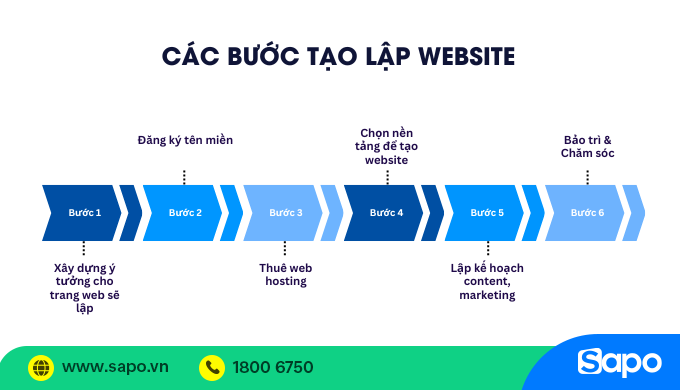
1. Step 1: Develop an idea for the website you will create – the crucial first step in website creation.
Developing a clear idea and setting specific goals before starting any project will greatly benefit you during the implementation process.

And obviously, to create a truly effective website that best suits your intentions, pay attention to the following:
1.1. Choosing the right website type
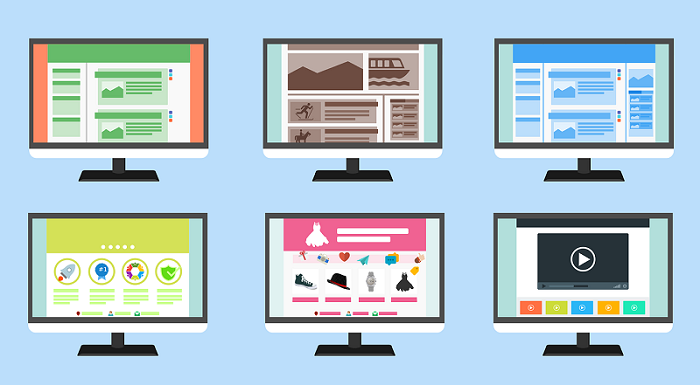
In fact, there are many types of websites to serve the different needs of businesses . Before learning the details of how to create a website, you need to determine the type of website you want to create.
Each type of website has its own unique design, interface, features, integrated applications, and effectiveness. Our task is to choose the type of website that best suits our needs and purposes.
Some of the most popular types of websites today include:
- E-commerce website: For businesses that want to sell products online, it needs features such as a shopping cart, payment, and order management ( e-commerce, online sales websites for specific industries, etc.).
- Business websites, company introduction websites: This type of website is suitable for businesses that want to build a professional brand image online, increase customer trust, and create an official contact channel through the website.
- Educational website : For schools and online learning centers that want to sell courses, lectures, learning materials, introduce their programs, faculty, and admissions information, or want to build their personal brand, share knowledge, or offer online/offline courses.
- News websites, online newspapers: Suitable for news agencies, editorial offices, media outlets, or businesses that want to build their own news site about their industry. If you frequently post articles, update events, or want to increase traffic through content, this is the type of website you should choose.
- Forum-style websites, classified ad sites, and online marketplaces : These types of websites are designed for community groups and forums to exchange specialized knowledge, hobbies, or to conduct buying and selling transactions, classified ads, recruitment, and experience sharing (e.g., automotive forums, real estate forums, freelancer forums, etc.).
- Personal Blog Website : If you want to showcase your expertise and create a personal brand online, consider creating a blog or portfolio website. This type of website is ideal for creative individuals, professionals, freelancers, designers, programmers, marketers, and others who want to build their personal brand, display projects, and share knowledge.
- Landing page websites : If you only need a single page where visitors can buy or register immediately, this is the best option. Landing page websites are primarily used to introduce a specific product or service. Landing pages are also commonly used for advertising campaigns, promotions, or lead generation (registration, form submission).
1.2. Identify the necessary functions and technologies for the website.
Once you’ve chosen the right type of website, you need to research and determine which functions or technologies are necessary for your website before designing it.
For example, when designing an e-commerce website , you need to equip it with an automated purchasing process (shopping cart, order placement, online payment, etc.).
A forum website needs features such as member registration/login, topic-based discussion pages, etc.
Or, a website specializing in interior design and construction might need to integrate forms for feng shui consultations, automated price quotations, etc.
In our journey of accompanying and supporting businesses in creating and designing professional websites, Sapo Web has compiled some of the most important technological factors that customers are interested in today, such as:
- The website needs to have fast page load speed.
- The website needs to have a high level of security.
- Website with good SEO support.
- The website has an easy-to-use administration panel.
- The website can be easily upgraded, supplemented, and fitted with applications or useful features according to customer needs.
- The website is optimized for UX/UI
…
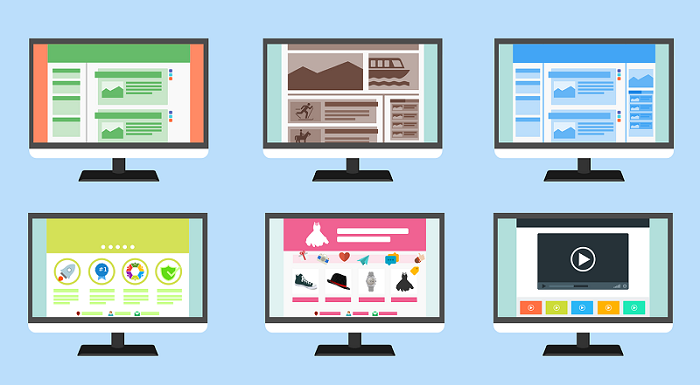
How to create a website – Choose the type of website you want to create. (Image: Internet)
A great idea for your future website will take shape when you clearly define your goals and desires.
This is also an effective way to avoid paying a huge amount for unnecessary “superfluous” features or technologies.
After developing a basic idea for your website, proceed to the next step: Register a domain name and rent web hosting.
2. Step 2: Register a website domain name
If the process of creating a website is envisioned as building a house, then the domain name is like the address of that house, and people can use the domain name to find your website.
And obviously, before creating a website, you should choose a domain name that you really like.
The ideas for domain names are incredibly diverse, and you can choose based on your preferences, or associate it with a identifying mark related to your personal/business/brand/product.
The process for registering a website domain name is quite simple; just follow these steps:
– Step 1: Brainstorm domain name ideas
– B2: Check domain availability
You can visit the websites of several reputable domain name providers to check if the domain name you want to register has already been registered by someone else.
If no one has registered in advance, you can choose to place an order at the price already published on the website.
The price of registering a domain name will depend on the domain extension you choose. Generally, .com or .vn domains are more expensive than others, but they are also the most popular choices.

Check domain availability before registering. (Image: Sourced from the Internet)
– Step 3: Contact and register to purchase the chosen domain name.
You can register multiple different domain names simultaneously according to your needs.
Here are some important tips to keep in mind when choosing and registering a website domain name:
- Avoid choosing domain names that are too long, contain numbers, or special characters.
- Choose a domain name based on your business/product/personal brand.
- Consider choosing domain extensions such as: .com, .vn, .com.vn, .org, .net…
- In particular, avoid domain names that are difficult to pronounce or that, when written, evoke negative or prohibited content or meanings.
- Avoid choosing a domain name that is too similar to one that has already been registered.
3. Step 3: Rent web hosting
Web hosting is understood as the place where you store all the data of your website, so that website visitors can find and download the data when needed. Think of it like the plot of land on which you build your house.

How to create a website – Rent web hosting. (Image: Collected from the Internet)
After choosing a suitable web hosting service, you need to connect your previously registered domain name and the hosting service, also known as pointing the domain to the hosting.
Here are some criteria you should consider when choosing a web hosting package:
- Number of websites that can be hosted
- SSL security certificate
- Database capacity, bandwidth
- RAM (internal memory)
- User-friendly control panel (admin page)
- Friendly and professional consulting team, providing lifelong support…
For self-hosted websites (like WordPress, WooCommerce, etc.) or custom websites (coded by yourself), you have to rent hosting for your website, which can be quite complicated for those without much knowledge of technology or programming.
On the other hand, if you choose a cloud-based website , such as Sapo Web, you won’t need to worry much about hosting or SSL security. Instead, your website will be built directly on the hosting of the platform provider.

Sapo Web – Professional website design solutions that help business owners increase online revenue and expand their brand reach. Learn more and try it for 7 days completely free today!
4. Step 4: Choose a suitable platform to create your website.
This is considered the most important step in the process of creating your website. Choosing the right website platform will affect the effectiveness and operation of your website in the future.

How to create a website – Choosing the right platform to build your website. (Image: Collected from the Internet)
How can I create a website? Currently, there are four most popular web platforms on the market. You can consider the advantages and disadvantages of each platform to make the best choice:
| Criteria | CMS | Website Builder | Website coded by the owner. | Platform website |
| For example | WordPress, Joomla, Drupal | Wix, Weebly, Squarespace | Code PHP, Laravel, React, NodeJS | Sapo Web, Haravan, Shopify |
| Suitable candidates | People with basic web knowledge who want to customize a lot of things. | Beginner, no coding knowledge. | Large businesses need exclusive websites with many unique features. | Individuals and SMEs want a fast, stable, and easy-to-manage website. |
| How it works | Install a CMS on your own hosting, manage your own content and interface. | Use the intuitive drag-and-drop tool with pre-made templates. | Hire programmers to design and code according to your requirements. | Register for a service package and create a website directly on the provider’s platform. |
| Flexibility / Customization | Very high – allows installing plugins, themes, and customizing the interface. | Restrictions – customization is limited to the platform’s allowed limits. | Maximum – everything can be customized to your requirements. | Average – customizable according to the provided modules |
| Initialization costs | Low cost – free or only requires hosting and domain name (~1-3 million VND/year) | Average – subscription fee (5-30 USD/month) | High cost – usually from 15-100 million depending on complexity. | On average – platform rental fee (3-10 million VND/year) |
| Maintenance costs | On average – requires paying premium fees for hosting, domain, and plugins. | On average – monthly/annual platform rental fees | High – costly in terms of maintenance, updates, and bug fixes. | Low to medium price – package fees include hosting, SSL, and security. |
| Implementation time | Medium – takes 2-5 days depending on the level of customization. | Fast – can be completed in 1-2 days | Long – usually 2-8 weeks depending on the project | Fast – can be completed and operational in just 1-3 days. |
| Scalability | High quality – easy to add plugins and new features. | Low – platform dependent | Very high – custom feature development | Good – upgradeable via packages or with the integration of additional modules. |
| Management & Maintenance | Self-management, requires technical knowledge (updates, backups, security). | Simple, all built-in. | Depending on the maintenance programming unit | Fully supported by the vendor (security, updates, technical support) |
| SEO & Search Engine Optimization | Good – supports many SEO plugins (Rank Math, Yoast SEO) | Okay – basic SEO tools are available. | Depending on the programmer’s skills | Excellent – already optimized for SEO and page load speed. |
| Security & Hosting | You have to take care of your own security, choose a good hosting service. | Built-in hosting, basic security. | Depending on the coding company and the dedicated server provider. | Built-in hosting and SSL, security guaranteed by the provider. |
| Outstanding advantages | Extensive customization options, large support community. | Easy to use, drag-and-drop functionality, no coding required. | Exclusive, high-performance, and highly customizable website. | Comprehensive, user-friendly, and with technical support from A to Z. |
| Main disadvantages | Technical understanding is required; plugin errors are common if installation is not done correctly. | Limited customization options, difficult to move data. | Expensive and dependent on the coding side. | Platform dependent, difficult to switch to other systems. |
- Create a website with a CMS.
CMS (Content Management System) is one of the most popular tools for website design, creation, and content management today.
The three most popular CMS brands are WordPress, Drupal, and Joomla, with WordPress considered the most powerful.
- Creating websites using tools (Website Builder)
The advent of website builders has ushered in a new era of automation in website creation.
One of the most prominent website building platforms offered by Website Builders is Wix.
Wix is considered the fastest, simplest, and easiest-to-use website creation tool for those who are just starting to learn how to create websites but don’t want to spend too much time learning.
- Website coded by the owner.
This method means you hire a service provider to write custom code for a website according to your requirements (also known as hand-coding).
This type of website is suitable for businesses that want a unique website, one that stands out from others and incorporates distinctive features. However, the cost of implementing this type of website is quite high, and future upgrades are also very difficult.
- Create a simple website with a cloud-based website platform.
Creating websites using cloud-based platforms is becoming increasingly popular. These platforms are designed using cloud technology and are most commonly used in e-commerce and corporate website design.
Some well-known website design brands on this platform include: Sapo Web, Haravan, Spotify, etc.
While WordPress is a self-hosted website platform requiring you to rent hosting for your website, Cloud Platforms support customers in creating websites on their own hosting. This means you don’t need to worry about hosting, SSL, or any other programming aspects; you’ll receive comprehensive support throughout the entire process, from creation to use and upgrades.
One drawback of this platform is that users may feel dependent on the web platform provider.
However, for those who are not tech-savvy, don’t know the internet, or don’t have much time to learn and tinker with their website, this is the most optimal web design platform .
For those who are not technically savvy, choosing an affordable website design service is a safe, economical, and quick solution, providing a foundation to start a business sooner.
The following content will guide you on how to create a simple website on a Cloud Platform:
– Phase 1: Choose a theme and customize it to your liking to create a website.
At this stage, you need to choose a suitable theme (also known as a template or web interface design) from the web theme library .
Always remember who your target customers are, what audience your website aims to serve, and what industry or field it belongs to. (These factors were identified in Step 1. )
Each theme has its own unique website design style, features, and applications, specifically tailored to different industries and target customer groups.

How to create a website – Choosing a suitable website theme template. (Image: Collected from the Internet)
Of course, you can edit most elements from the template theme such as menus, colors, layout, logo, effects, etc., but choosing a template theme that best matches your ideas and goals will save a lot of time and effort in the process of editing and redesigning the website interface.
One important point to keep in mind when creating a website is to ensure that the design elements are consistent and aligned with your business/personal brand identity.
– Phase 2: Install desired utility applications
After choosing a website template and editing it to your liking, proceed to install the necessary applications for your website.
Utility applications on a platform (similar to plugins in the WordPress platform) are supporting tools that are installed on a website to provide a specific feature or function.
Below is a checklist of the 10 most used web applications today (based on a survey of over 230,000 customers who have used Sapo Web’s website platform as of February 2024):
- SEO Optimization
- Back up your data.
- Smart search
- Multilingual Ae
- Google Products Feed
- Contact Form
- Facebook Live Chat
- Buy X, Get Y Free
- Product review
- Buy on installment
– Phase 3: Providing content for the website
Before completing the website creation and design process , you need to provide the appropriate content for it (content, images, etc.).
Focus on investing in and building website content right from the start, as this is the “core value” that will affect the effectiveness and development of your website later on.

Content is the core value of a website. (Image: Collected from the Internet)
The content of a website is displayed in many locations: Menu, Header, Footer, Homepage, Category Page, Service/Product/Article Detail Page, About Us Page, Contact Us Page, Blog Page, etc.
Today, blogs are crucial platforms that require significant content investment because they serve as a platform to connect with your community and customers. Furthermore, blogs help sellers position their brand and build effective marketing and SEO strategies.
– Phase 4: Public launch and testing of the website
After completing the design and content creation process for your website, publish it and conduct testing to check its functionality, features, and user experience on both computers and mobile devices so that you can make timely adjustments and changes.
You can also create your own website with the help of AI technology. Check out the AI web design tool Sapo shared in this article.
5. Step 5: Develop a content and marketing plan after creating the website.
Simply creating a website and then leaving it at that is almost meaningless. You need to be serious about implementing and developing content and marketing strategies to make your website more prominent and frequently visible to your potential customers.
- Implementing and developing a content strategy.
For each type of website, depending on the industry, field, and desired website effectiveness goals, you will need different content development plans.
For example, if you want to design an e-commerce website , invest in content for the product description page, including:
– Product images : Use high-quality photos, avoid using misleading images, and ensure images are optimized for size and SEO.
– Product description information : Provide customers with the most complete and detailed information about the product’s specifications and characteristics: classification, size, color, origin, structure, features, applications, etc.
– Content of consultation : Instructions for use, instructions for storage, etc.
– Policy content : Warranty policy, shipping policy, payment policy, return policy, promotional policy, loyalty program policy, etc.
– Contact information : Provide customers with your business/store’s contact information.
– Building blog content : Create articles with the most relevant content about your business field.
For example, if your website sells furniture, blog posts could cover topics such as: interior design trends, beautiful furniture designs, furniture maintenance tips, interior design and construction materials, etc.
If you’re designing a business website or company website , here are some of the content you need to focus on building and developing:
– About Us page (Business & Brands…). Please provide complete and truthful information about your business: Contact information (Phone number, Email, Address, Website, Tax ID…), History, Mission & Vision, Business areas, Brands & products, Awards and certifications (if any).
– Projects Page – Showcase your company’s capabilities: Provide a list of projects/products/brands your company has completed.
– Human Resources/Organizational Structure Page
– Contact page
…
- Develop and implement a marketing strategy.
After creating a website and building great content, the next step in website creation is to figure out how to make your website known, visited, and achieve the desired conversion rate.
At this point, we need to develop a strategic marketing plan that is appropriate for each stage of the website’s development:
– Promote Social : Share your website on social media platforms: Facebook, Instagram, YouTube, TikTok, Twitter, etc.
– Promote Forum : Introduce and share your website on relevant and high-quality forums.
– SEO (Search Engine Optimization) : This is a solution to optimize your website for search engines and strive to get it to the top positions on Google. This is a rather long-term method but delivers excellent results, attracting a steady stream of organic traffic to your website without spending money on advertising.
– Advertising : You can choose to run Google Ads or integrate conversions from Facebook Ads to your website. Depending on your goals and desired results for your website (traffic, leads, or conversions), you need to create advertising campaigns and allocate your budget appropriately.
– Traditional marketing : Leave your website information on printed materials (product packaging, banners, event posters, flyers, business cards, profiles, catalogs, billboards, promotional gifts, etc.)

Develop and implement a marketing strategy to grow your website. (Image: Internet)
- Essential tools for website development
Below is a list of some tools recommended by industry experts to help you develop your website more effectively and easily:
– Keyword research tools : Google Keywords Planner, Spineditor
– Website analytics tools : Google Tag Manager, Google Search Console, Google Analytics
– Content duplication checking tools : Small SEO Tool, Duplichecker, Copyscape
– On-page SEO optimization tools : SEOquake, Screaming Frog, Website Auditor
– Competitor research tool : Ahrefs
– Keyword ranking checker tools : Spineditor, Serprobot
– Page load speed testing tools : Google PageSpeed, Lighthouse, etc.
6. Step 6: Website maintenance, upgrades, and upkeep
Many people mistakenly believe that the process of creating and designing a website ends after it is launched to the market.
However, a professional website requires careful attention from the initial creation stage to the final stage of maintenance.
In reality, technology is always developing rapidly and powerfully. Your website needs regular maintenance to measure and test functionality, user experience, fix any bugs, and upgrade or update with new features.
For effective maintenance, you should incorporate website analytics to detect errors early and track changes in user behavior as quickly as possible.

Technology is constantly evolving, so website maintenance and upgrades also need to be performed regularly. (Image: Collected from the Internet)
This is why I recommend that you choose to create your website on a reputable platform like Sapo instead of others. They will support you with all the issues from the initial creation of your website until the end of its lifespan, according to your needs, at a reasonable website design price .
7. Frequently Asked Questions about Creating a Website
Question 1: Do I need to know programming to create a website?
No need. Nowadays, there are many website design platforms that don’t require coding, such as Sapo, Haravan, Shopify, etc. You just need to choose a template, add content and products, and you can publish your website in minutes.
Question 2: How much does it cost to create a website?
The cost of building a website depends on the platform you choose:
- Cloud Platform Website : from 3 – 10 million VND/year, including hosting, SSL, and security.
- CMS (WordPress) : approximately 1-3 million VND/year (domain name + hosting + theme/plugin costs).
- Custom-coded websites : costs range from 15 million to 100 million VND or more, depending on feature requirements and design.
Question 3: What does the cost of operating a website include?
Once a website is launched, it will incur the following maintenance costs:
- Domain name : ~300,000-500,000 VND/year.
- Hosting or platform fees : ~1-3 million VND/year (or depending on the service package).
- Security costs (SSL), plugins, maintenance : vary depending on the platform used.
- Marketing, SEO, or advertising costs (if you want to increase traffic and sales).
Question 4: How can I get more visitors to my website?
To make your website attractive to customers and increase traffic, you need:
- SEO (Google Search) optimization : publish SEO-optimized content, use keywords relevant to your products/services.
- Run ads : use Google Ads, Facebook, and TikTok to drive traffic quickly.
- Share your website on social media, Zalo OA, and email marketing.
- Update your content regularly to retain readers and improve search rankings.
Question 5: Why is the website unavailable?
A website may temporarily go down or become unavailable for the following reasons:
- The domain name has expired or has not been renewed.
- Hosting is experiencing errors or interruptions.
- Code errors, plugins, security (for self-managed websites).
- Access is temporarily blocked by the service provider.
Solution : Check your domain name and hosting, and contact your website design company or technical department for assistance.
Conclude:
Creating a website isn’t as difficult as you might think if you understand the basic instructions above. If you know programming, you can design your own website using some of the platforms mentioned to be more independent and save costs.
However, for large businesses or entrepreneurs who want to create a more professional website, I recommend choosing a reputable website design company. If you don’t have a website yet and want to start building this effective business channel right away, you can consider Sapo’s reputable website platform: Simple and fast website creation in 10 seconds – SEO-optimized website – Beautiful interface, fast page loading speed – Online ordering and payment features, automatic order forwarding to shipping companies – Effective advertising conversion support…
With the increasing application of AI in e-commerce , owning a website integrated with AI technology helps you not only improve sales but also analyze customer data more accurately, automate marketing, and increase conversion rates.